In Third Person

A personal look into video games, the video game industry and video game culture.

Image from xbox360gamerz

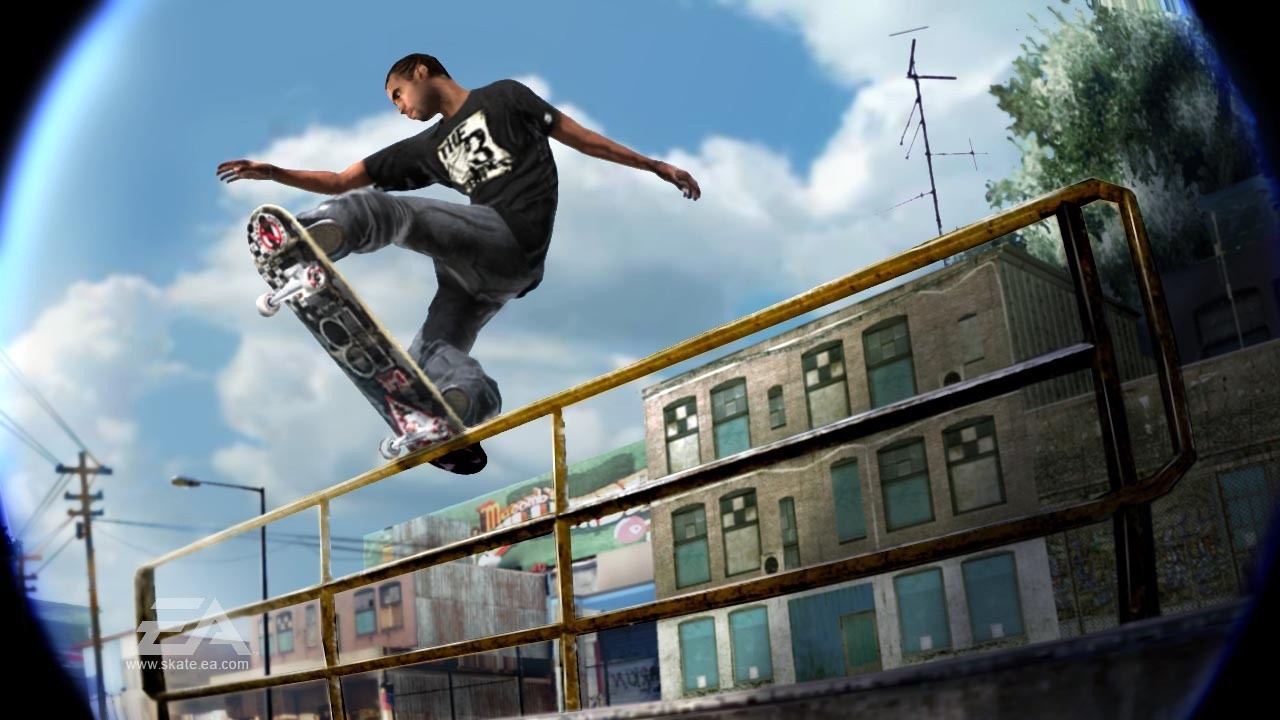
I'm still playing (and for the most part) enjoying Skate, which I'm playing at a very leisurely pace. While it's a lot of fun to just cruise around the world and bust tricks, there are some very awkward design choices that can annoy the heck out of you when you play Skate. The inability to walk can be infuriating due to the way the world is designed. Bystanders always seem to get in the way of your objectives, which leaves you skating into them more than you would like. But I wanted to talk about one very specific case of poor game design that drove me nuts.
Three things I need to tell you to set the scenario up for you:

1) Skate exists in one persistent open world. You can skate anywhere in the city seamlessly. However, should you want to warp to different parts of town, you can go to a subway station and use the train. When you do this, you're faced with a loading time while the game loads in the new area.

2) Much of the Skate experience is trial and error. It gives you a challenge, and you try and try again until you get it. To make the process faster, the game allows you to mark your own starting points that you can instantly warp back to the point should you need to.

3) There is a challenge in the game called "Gap It Up". In it, you have to skate over a bridge, hop onto a ramp, then jump over a huge gap. If you need to visualize it, I'll put a video in below.


This is where the game design weirdness takes place. The game starts you off pretty far away from the actual jump. You can set your own marker closer to the jump, but you then won't have enough speed to get past the first bump, which you can see in 0:04 of the video. At 0:06 of the video, you have to make and land that jump while scoring a certain number of points to complete the objective.

In the video, the player nailed it just fine. If you screw it up though, and you want to snap back to your starting position, the game actually takes you out of the game and drops you into a 15-second load time before you can retry the challenge. I don't know if this is happening because I'm too far away from the starting marker, or because the starting point and the ending point are between seams of the world that need to be reloaded in when jumping from one place to the next.

In every other scenario that I have encountered in Skate so far, I can hold the left bumper and press up on the D-pad and instantly warp back to where I started. However, in this one instance, the game completely breaks its flow by forcing you to sit through load times every time you screw up that trick. The loading is actually longer than the time it would take for you to even attempt the trick and if you screw up a lot (like I did), then you'll be watching a lot of seemingly pointless loading.

This is not a game-breaking flaw in Skate, but I think it was a poor design choice to let this happen. If you're going to give the player the ability to snap back to their starting position from the beginning of the game, it should work that way always. Making me then sit through 15 seconds of loading to retry an 8-second trick is nothing short of infuriating, especially when I have to see this load screen 4-5 times in less than two minutes.

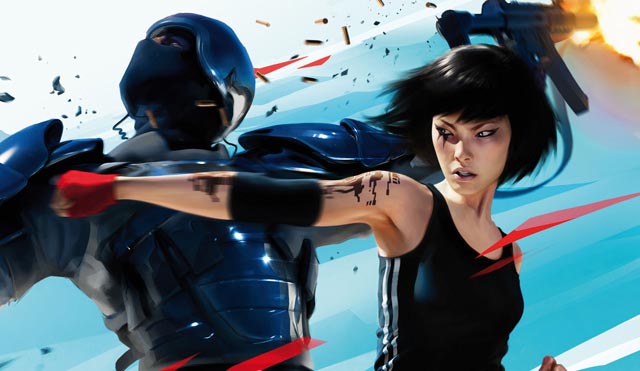
Image from Alcoholic Gamer

During a lapse in my gaming itinerary, I decided to pop Mirror's Edge back into my 360. Last time I wrote about this game, the game tried really hard to make me not like it. The game succeeded at that. I still love the premise of a free-running first-person game, but I stopped at the end of the second level in frustration, after dying roughly 50 times.

After a few minutes in the training level, I thought I was ready to go. What the training mode didn't prepare me for was encountering trial-and-error gameplay and crappy combat.

The biggest issue for me was that the game doesn't make it clear enough for where you need to go. There are obvious elements for you to grab onto, which are coloured red, but it's usually not that clear in the heat of battle. In the third level, I got to a point where I had absolutely no idea how to get out of the area before the guards came. I had to watch a YouTube video for the answer and when I saw it, I said to myself, "WTF!@#" I never would have come up with that solution myself. Due to the way the levels are designed, I get that feeling all the time. I could follow along with one of the many guides online if I really wanted to, but a game really shouldn't make me resort to that.


To compound the issue of getting lost, oftentimes you're under the gun by guards. In a game designed around running, the combat feels horribly out of place and leaves you greatly underpowered. Hand-to-hand combat is really clunky and enemies can kill you very quickly. Picking up a gun doesn't help much either, since the actual shooting mechanics are pretty bad and carrying a gun actually slows your character down.

I applaud Dice and EA for trying something ambitious with Mirror's Edge. I can see why some people absolutely loved this game. When it has you free-running and doing crazy acrobatics, it can be some of the most exhilarating action you'll ever experience. But to counter-point, there are a lot of people that hate this game, too. The problem is that the game isn't that awesome all the time. The experience is hampered by somewhat clunky controls, level designs that aren't easy to navigate on your own and terrible combat.

Image from On Mirror's Edge

A sequel to this game has been confirmed
, and it'll be interesting to see how they handle it. A lot of people have asked for Mirror's Edge to go third-person, but I think that would take away the most unique aspect of the game. Without being in first-person, it's just another Prince of Persia or Assassin's Creed style game. I do hope they polish the controls and make the areas easier to navigate. As far as combat, they can either improve the game by improving the combat mechanics or stripping combat from the experience completely to focus on the acrobatics. I won't be the first in line to pick up Mirror's Edge 2, but I'll continue to hope they refine this idea to perfection.

Image from Level Up News

The other day, I received my DJ Hero setup in the mail. Not having bought refurbished products before, and being a bit concerned over the condition of the stuff they sent me, I was very quick and thorough with my inspection. The game was opened, yet the disc and manual looked to be in mint condition. As for the turntable and mixer, it looked just fine as well. Considering the fact that I can't even get DJ Hero used for anywhere close to what I paid for this refurbished version, it was a steal.

Within a few minutes of playing DJ Hero, it's clear to see that it's one of the more technically advanced music games on the market. There is a steeper learning curve to it than most, partially because of all of the elements involved in handling it and the general unfamiliarity with turntables that I expect most players to have when first trying DJ Hero. At the expert level, you have to think about pressing the three buttons on the the platter, rotating the platter forwards and backwards for scratching and back-spins without losing track of where the buttons are, moving the cross-fader, turning the effects knob and activating the euphoria button at the right time.

Image from pdashmedia

If that freaks you out, it shouldn't (yet). There are a number of difficulty settings, with the beginner setting giving you the bare minimum and every difficulty setting above that gradually introduces new gameplay elements to the mix. There's no shame into jumping into the game at beginner. As for me, I started out at medium and had a blast. By the end of my first day with DJ Hero, I had begun gaining 5-stars on the early mixes on expert difficulty. I don't expect myself to be the next DJ Q-Bert anytime soon, but the thrill of tearing through a mash-up is pretty awesome.

Speaking of the mash-ups, the game is made up entirely of mash-ups. This "genre" of music isn't necessarily my bag, but these all sound great and are almost all fun to play. There are two downers though that come with this package. The first one is that the set-list reuses a lot of songs. A lot of the songs get used more than once, and at least one song gets reused four times. The other downer comes from the implementation of the music. Outside of the back-spins and the effects knob, there's no room for your own creativity. In other music games, such as Guitar Hero and Rock Band, that isn't much of a problem, because you want to play the songs the way they're meant to be played. But the nature of DJ-ing lends itself to a certain type of creativity that you just can't do by replaying someone else's mix.

OK, I lied; there's one more downer in regards to the music in DJ Hero. The game also comes with 10 mixes which can be played with a person on the turntable and another person on guitar. I appreciate the gesture, but these mixes are the least fun to play and sound very forced. In particular, the guitarist is getting the short end of the stick, having to play fairly boring guitar charts. Even if the tracks were great to play, 10 tracks isn't much to work with. DJ and guitar mode will probably last you an hour at most before both band members run out of stuff to play.

Image from theexactly

If you're in single-player mode, you will be spending much of your time in the game's career mode. This mode feels very bare-bones, especially compared to the likes of Rock Band, which does a lot outside of the gameplay, such as a loose story and unique challenges to spice up the experience. In DJ Hero, you simply move from set-list to set-list, earning stars to unlock characters and accessories as you go. There's no story or extra motivation beyond that. The other weird design choice here is that songs are grouped into sets, and you can't progress unless you beat all the songs within a set. While I see the benefits in being able to play through multiple songs without having to navigate a menu, it is a bummer when you come up short on the very last song, and have to play through the entire set again to redeem yourself.

DJ Hero is a pretty good game that has reinvigorated my interest in music games. It's core gameplay mechanics are a joy to experience if you can overcome the learning curve. In order to compete with the likes of Rock Band and Guitar Hero, it's going to provide a deeper experience outside of just mixing music, such as a more compelling single-player mode and more downloadable content. I look forward to seeing what improvements Freestyle Games has in store for DJ Hero 2. Personally, I'm praying for the ability to hook up two turntables to one mixer for "real" DJ-ing action.

Before I go, I should talk a bit about the value proposition that DJ Hero at regular retail price offers. At the price I paid for it ($50 refurbished), I can fairly easily overlook the game's shortcomings and scratch away. However, at regular retail price of $130, I don't know if I could justify owning the game for that much, even though I think it's great. As for the special edition of this game, which is $220 in my country, forget about it. If you can get this game for under $100 and you're a fan of music games, then this may be right up your alley. At regular retail price, I would pass.

Image from Kotaku

Yesterday at the Game Developer Conference, Sony finally announced the name and some more details about their new motion controller. The controller (and sub-controller) are now known as the Playstation Move. I'm not going to go into details about how the thing works, or what games were just announced to support it, but I'll be happy to direct you to places that have that type of information.

What I wanted to do is use this announcement as a jump-off point for my current perceptions of motion control. Back in 2006, I was all aboard the motion control train. With Nintendo - my favourite game company - backing this technology, there was nothing that could go wrong, right? Wrong.

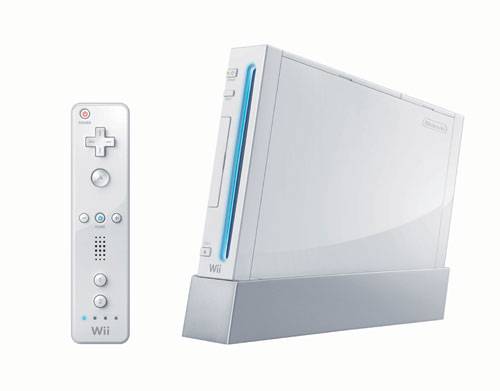
I bought my Wii on launch-day and had a blast with it. For the next few weeks that winter, every party with family and friends was a Wii party. While motion controls did bring something new to the table, Nintendo's initial stab at motion controls brought with it a number of problems.
Image from Smart Canucks

For anyone that has played a Wii, you've figured out by now that the Wii remote doesn't translate your movements 1:1 into the game. Rather, it reads a gesture you make and then plays out the action on screen if you've done the gesture properly. What happens in most Wii games is that you end up not truly simulating the motions you try to do. Instead, the remote doesn't read your motions correctly and does something you don't want it to do, or you end up doing "short-cut motions" that work just as well as the full motion, which kills any immersion the game was supposed to provide. Flicking your wrist to throw a bowling ball works just as well as a full-body throw.

The lack of buttons, poor game translations from regular controls to "Wii" controls, games going crazy when the remote isn't pointed at the screen and a sudden shift in focus towards casual games made a lot of what the Wii was supposed to be about not that fun for me. I have tried the motion plus attachment, but having to constantly reset the controller to work properly is a pain. Within a few months of buying the Wii, I caved and bought my first non-Nintendo system since the Atari 2600 because I wanted to play games that controlled with buttons, d-pads and analog sticks. I still love me some Wii Bowling and Boom Blox, but most of my gaming time is now motion controller free.

Regardless of how I feel, the Wii has basically won this console cycle, leaving Sony and Microsoft floundering to try and capitalize on the success of motion control. Sony has taken a very "me-too" approach with the design of their Move controllers, and Microsoft is going way out in left field with the controller-free Project Natal. While they both claim to have better solutions to motion control, I have my doubts. Watching the Playstation Move in the video below only further fueled my doubts, as the person in the video punches wildly in the air and the game does nothing to respond to his movements.


I'm not even going to get into the myriad of other challenges Sony and Microsoft have specifically in trying to launch these products into the marketplace. I just want to talk about how these control mechanisms work and what it'll take for me to fully buy into them as a main form of input. I'll break it down into three key points:

Image from IGN

1) Accuracy

In my 20+ years of gaming, I've never had problems inputting a command with a button press. The game only has to decipher whether or not the button is pressed down or not. With motion control, there are so many more variables involved, and therefore, a higher percentage of error. It's so frustrating to play games like any Wii boxing game and see your physical energy go to waste when you throw a real-life hay-maker and see that my character is standing still.

The Playstation Move looks to be better than the Wii remote, but still appears to suffer from some accuracy quirks. With the Natal, we have no idea how accurate that setup will be when it hits living rooms around the world. I know it's a lot to ask, but I will always prefer pressing a button to doing a gesture if the gesture isn't accurate enough.


2) Purpose

Very early on in the Wii's life-cycle, a lot of third-party developers thought they could cash-in on the Wii hype train by shoehorning motion controls into traditional games. Time and time again, we've seen this strategy fail miserably. Often times in the case of motion controls, developers simply substitute a button press with a gesture, which usually doesn't feel good, doesn't accurately reflect the action on the screen and takes you out of the action more than brings you in.

Motion control games need to have a clear purpose for being in the game or don't bother. Developers need to create experiences that work with the strengths and weaknesses of the interface in mind and not force the player to flail their arms to substitute a button press. Throwing a baseball at a stack of blocks in Boom Blox feels awesome. Having to draw a star on the screen to activate slow-motion in Trauma Center feels awful and makes no sense.

Image from Hardware Sphere

3) It has to feel right

While this particular point applies to all motion controllers (even you, Tony Hawk: Ride skateboard), I'm most concerned about the Natal on this one. Microsoft has hyped this up as the most natural gaming experience ever, but I don't see what's natural about flailing your limbs around to hit balls that are projected at you or driving a car by pretending to hold onto a steering wheel and pretending to hit pedals with your feet that aren't there. The big promise of motion control is the ability to give players a more realistic and immersive experience. Poor motion control implementation just feels even more awkward and out of place than any button press would.

While I am currently not much of a fan of the current implementation of motion controls in today's consoles, I'm reluctant to write them off completely. I know that motion controls are here to stay and will improve with time. By the time these things work as planned, maybe I'll warm up to them more. I'm still not sure if I'll ever be ready to let go of sitting on the couch and pushing buttons, but we'll talk about that when motion controllers finally come of age.

Image from IGN

I'm officially 1/4 of the way through Dead Space, and there was something about the overall feel of the game that I thought was worth mentioning: the underlying sense of deja vu.

Normally, that wouldn't necessarily be a good thing. And to Dead Space's credit, it does do a few good things to make the game stand out on its own, such as the emphasis on shooting limbs and everything that happens in space or low-gravity scenarios. But it's pretty clear to see that Dead Space is clearly built off of other influences.

The third-person shooting action and survival horror elements are directly lifted from Resident Evil 4. The story progression though big events or small collectibles such as audio logs came from Bioshock and Metroid Prime. Much of the space station aesthetic comes from Metroid Prime. Outside of games, Dead Space takes a ton of cues from the "Alien" series of movies.

To be fair, if you break down 99% of anything ever made, you can find all the elements that came before it to create the final product. In Dead Space though, the game doesn't try and hide where those influences came from. If anything, I really feel like they tried hard to at least match its influences in terms of quality, if not surpass them.

Image from Venture Beat

Throughout my experience so far, I always feel like I'm playing a mash-up of a bunch of other people's ideas. But damn, they're executed so well in Dead Space. The overall level of polish and detail so far is spot on with what I think this game should be. It's fun, very exciting and constantly scaring the pants off of me. There is a moment towards the end of chapter 3 where you encounter something that is 10 times more insane than anything you've encountered up to that point and I almost lost it. I was actually yelling at my TV and mashing buttons during a moment that required precision because I couldn't help myself.

All of the things it borrows from other games kind of makes Dead Space a more "comfortable" experience. Not in the sense of being less scary, but being able to quickly jump into this world and have fun. It's always in the back of my head that I'm not playing something wholly new, but as long as it stays this good, that's totally fine.


Image from Video Game Central

After playing The Lost and Damned, I wasn't sure what to expect from The Ballad of Gay Tony. While the Lost and Damned did a lot of things to separate itself from the core Grand Theft Auto experience, I don't think all of it was worth while. I really loved the characterization in The Lost and Damned, but there was a very distinct point where the focus gets taken away from the main conflict and when you finally come back to it, the conclusion doesn't give you the payoff you were hoping for. All the while, I was struggling to get re-acquainted with the Grand Theft Auto controls.

I'm currently about 8 missions into The Ballad of Gay Tony, and it's starting off on much better footing for me than The Lost and Damned did. Controls are no longer a factor with me, now that I've had the entirety of the TLAD to get used to them. Not exactly a ringing endorsement, but I'm not thinking about them any more when I play. While this game is currently lacking in innovation in comparison to TLAD, where it has it beat hands down so far are the missions. The game doesn't really have any "warm up" missions and goes straight into the crazy stuff. The second mission features you hitting golf balls on a driving range into a guy tied to the vehicle that picks up golf balls. From there, it's been increasingly bombastic and awesome.

My only gripe so far with Gay Tony is the plot and the characters. The story of Luis and Tony is probably the weakest of the three GTA IV stories, even though both characters are very likable. The main story arch is built around one person having to clean up another person's mess, which kind of has been done to death in this series. This even happened in TLAD, but it was offset by a great tension between Billy and Johnny. The antagonists in TBoGT just aren't as strong.

Thankfully, Rockstar got the missions right, which is the most important part of any GTA to me. TLAD had some missions that felt almost broken in design to me, which upset me more than anything else in that game. Everything so far in Gay Tony has been smooth as butter. I can overlook a somewhat weaker story when I'm busy driving away from a biker gang, the cops, a tank and a low-flying helicopter and throwing remote sticky explosives at them all.

Image from Nerdles

Back in 2008, I was very intrigued by Dead Space. After E3, the buzz going around was that it was like the evolution of Resident Evil 4. Since that game is one of my all-time favourites, Dead Space was very much on my radar. The reviews came out great and it eventually went on to sell at least enough to warrant a greatest hits re-release.

So why didn't I pick it up back then? I don't know, really. At the time, I know I was busy with Rock Band 2, Gears of War 2 and Left 4 Dead. After I was through with those games, I would always look at that box every time I went into a game store, but never acted on it. I even saw this game brand new for $10 and still didn't buy it. For whatever reason, I just kept passing it up.

That is, until this past Christmas break. Using a gift card I received, I picked up Dead Space...and let it sit on my shelf for two months while I played through Modern Warfare 2, Assassin's Creed 2, Lego Rock Band, The Lost and Damned, Borderlands and Silent Hill: Homecoming.

Image from Christian Gamer

I'm only about half way through chapter 1, but dude...Dead Space is kind of rocking my socks. For the few of you who aren't familiar with this game, I'll give you a quick rundown. You are an engineer who has been assigned to fix this giant space station. You and your crew crash land on the space station, and quickly realize there are aliens on it. In terms of tone, mood and atmosphere, this game is very much like the movie Aliens.

What the game is currently lacking in innovation, it makes up for in polish. Even in 2010, Dead Space graphically is one of the best games out there. Audio wise, my goodness. It has some of the most amazing sound of any video game. The ambient sound really sets the tone of the game and does a great job of freaking you out to the point where you're not sure if those creepy noises are coming from the game, or something in the other room of your house. Leading up to the release, EA was hyping up how the game doesn't have a heads-up display in the traditional game sense. Instead, information such as your health and amount of ammo in your clip are displayed on the character himself and all menus are pulled up within an in-game floating "screen" that you can look around. This is supposed to keep you immersed in the game, but I would have been fine with a regular HUD. Nice touch nonetheless.

In terms of the horror elements of Dead Space, it's about on par at this point with Resident Evil 4. The "horror" you feel mainly comes from jump scares and the tension you feel when your character is physically threatened, which is a lot. If you're looking for a more psychological horror experience along the lines of Silent Hill though, then this isn't it.

Image from Neoseeker

The one thing that has me tripping up at this point are the controls. Granted, I've played this game for less than two hours at this point, but some elements of the layout and how they work are taking some time to adjust to. For instance, when you're not aiming your gun, the right stick acts as an independent camera control rather than controlling where your character is looking. What this means is, you can swing the camera around so that you're actually looking at the front of your character. It's weird when I try and look around from the perspective of my character using the stick and instead it moves the camera independent of the character. I'm also not a fan of left bumper acting as the run button. Having that handled by pushing in the left stick would work much better in my opinion.

There is still a lot of time for this game to get better (or worse), so I will reserve final judgment until I'm finished with it. I look forward to seeing how this plays out, because it's off to a great start.

Image from Softpedia

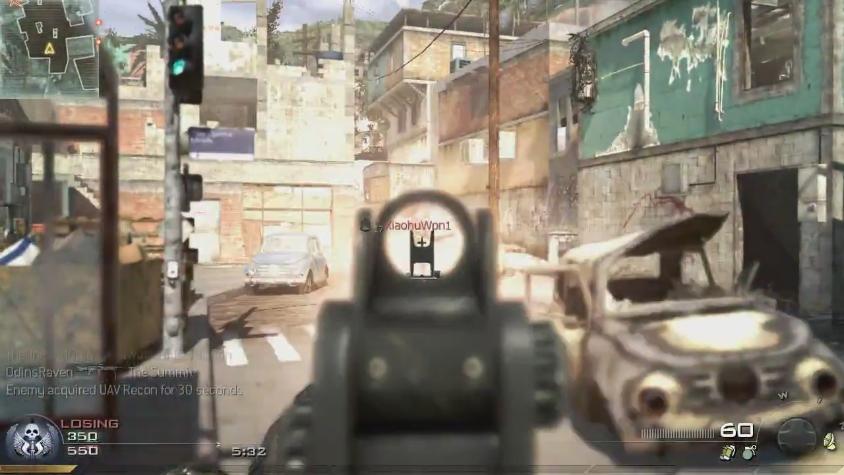
Over these past few weeks of unemployment, the game that has monopolized my time is Modern Warfare 2. Having played multiplayer for just over 24 hours, a lot of that was "not fun". I say that in the sense that for every time I killed someone, I died about 2.5 times. There were games where I would kill two people and die 20 times. The core mechanics of multiplayer are fantastic, but the competition is hella fierce. Most of these people also have an extra two years of Modern Warfare 1 experience as an advantage on me. As far as I know, the game doesn't do anything to keep low-level players from playing high-level players, so you pretty much have to play the best-of-the-best every time you hit the battlefield.

Being a hardcore gamer and one with experience playing other first-person shooters, I was able to analyze my play, recognize my mistakes, do my best to correct them and equip my character with the right load-out to fit my style. Now when I play, I regularly score over 1,000 points with a close-to 1:1 kill/death ratio. Sometimes, I even dominate the field. The game has become a lot more satisfying and fun to play now that I can play at a level I'm happy with. Granted, I wouldn't consider myself "good", but I can get by. I had to go through this same curve when learning Street Fighter IV. I lost a lot at first, but was willing to put in the work to get better until I did.

For others though, I can totally see how this is a very unappealing experience. In the grand scheme of things, you shouldn't have to play a game like you're training for a sport. I've heard so many people talk about their avoidance of playing online first-person shooters with the general public because the level of competition is just too high. Usually the story goes, "I die, then I re-spawn and immediately die again before I even have the chance to move!" I got lucky with Modern Warfare 2 clicking with me in a way that I can get by. Most of the time when it comes to competitive online gaming I'm not so lucky.

Image from Legendary Hackers

Despite all the negative things I've said about Silent Hill: Homecoming over these last few posts, I was ready to let all that slide. I was already over half way done the game, and I thought I could put up with the game's faults for a few more hours for the sake of completing it. That will never happen now. Or ever.

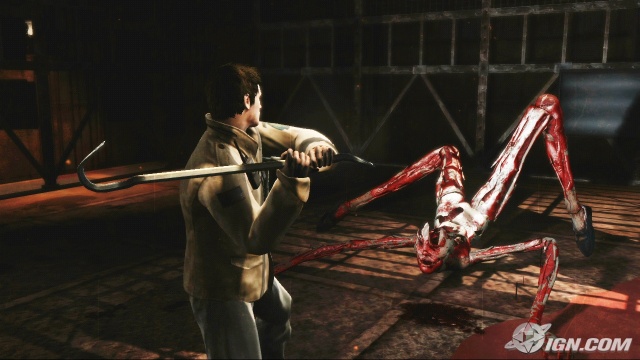
In my last Silent Hill post, I said I would continue playing it until the game committed a heinous act against fun. It just did.


I played the game for about half an hour just now, and I got to the puzzle pictured above. The only picture I could find was of the completed puzzle. When you start out, the pieces are all scrambled and you have to slide them around the space to create that emblem. No big deal, right? These types of puzzles have been in thousands of video games before, and can usually be beaten if you slide the pieces around enough. Not this time. I tried it over and over again, but there was one piece in particular that would be stuck on the opposite end of the board. I normally don't have the patience for these types of puzzles in games, so the moment I get stuck, I hit a guide.

To my horror, the very first step in every guide I found said to move the double block in the top right hand corner one space to the left. I looked at my screen and realized that my screen didn't have a double block in that position. I watched video solutions on YouTube and realized that my blocks were laid out completely differently from what everybody else got.

Dude, what?

So in fact, the puzzle the game gave me really was impossible to beat. I did more research on this, and apparently I'm not alone. This IGN forum user ran into the exact same problem as me. The only solution for her? Restart the game from the last save point. In this GameSpot thread, user peetowser said he wasted 3 hours of his life trying to solve this glitched puzzle until he realized it was broken. When he reloaded it, it worked fine. For those forum users, maybe their tolerance towards the game's deficiencies are higher than mine. But for me, this game ends right here. I've been force-feeding this experience to myself since the beginning, and if the game requires me to go back 30 minutes into the game just so the puzzle pieces can reset, it can go to hell. I am not giving that game any more of my time.

Even if I pass that, there's a chance that the game's next set of puzzles might glitch out for them too, just like it did for these people. Just like with Fight Night Round 4, I refuse to support games that are broken to the point that they actually prevent you from finishing them. I don't have any immediate plans on checking out any of the other entries in the Silent Hill series, but if they're as janky as this, I'll dedicate my gaming time towards other things.

Image from VG Chartz

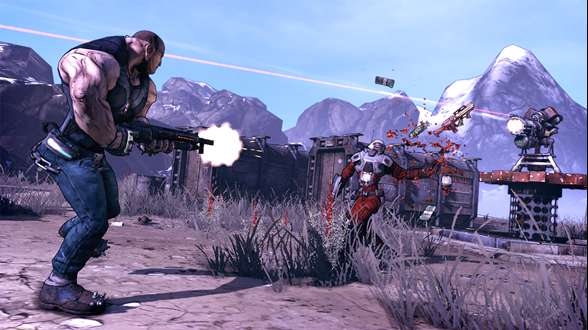
With not much going on in my life right now, I spent most of today in my basement completing The Secret Armory of General Knoxx. I know, this is the third Knoxx post in as many days, but now that I've beaten the main quest and most of the side missions, I'm ready to write down some final impressions of the DLC.

As mentioned in my first two posts, this DLC starts out ludicrously hard. If you just completed playthrough 1, or have a maxed out level 50 character on playthrough 2, you will die in the beginning. A lot. I got destroyed by the very first bad guy I saw, and continued to be dominated throughout most of the experience by flying drones. I can see a lot of people giving up on this DLC at the start, but if you can tough it out, you'll be rewarded with a really good add-on.

If you're starting this DLC in between level 35 and 50, then your experience will vary wildly. My brother is level 43, and this was how I found out that General Knoxx does not scale to your character. If you play with a level 43 character in playthrough 1, you will demolish everything in your path. If you play with a level 43 character in playthrough 2, you literally wouldn't stand a chance against anything.

For me, the moment I hit the jail level was where the experience finally came into its own. The jail level was easily my favourite part of the DLC because I felt that level captures Borderlands at its best. Yes, that's half-way through the DLC, but at this point regular encounters were tough, but fair. From that point on, it played just like you would hope it would. You get to shoot lots of guys, level up your character, and there are no shortage of big-time guns (elemental ones in particular).

Image from Scrawl FX

The ending to General Knoxx was much more satisfying than the main game. Without spoiling it, the boss fight is much better (and still tough) and the payoff is much improved (and exciting).

The only major aspect of this DLC I haven't tried yet is the ultimate boss. There is a level 64 boss that is practically impossible to beat by yourself, but with a party, you may stand a chance. If you beat the boss, you will have a chance to get some of the best guns in the game. The boss will never go away, so you can take a crack at it as many times as you want.

For 800 MS points, you get a lot of content from The Secret Armory of General Knoxx. Lots of new gear, quests, missions and a raised level cap are more than enough motivation for someone who just beat the game to go back to Borderlands. Playing through the main quest and the side missions will take you approximately 8-12 hours, which is very good considering the price. Just be warned that if your character is in the low 40's, you won't find a playthrough that fits for you and if you're coming into it maxed out, you're in for a rough start.

Image from Kotaku

I normally pay no mind to video game related petitions. They're usually stupid demands made by and supported by equally stupid gamers. But I couldn't help but discuss this recent petition related to Sonic 4. To be fair, not everyone in the petition is in support of it, and some people are there just to make fun of them like I'm about to.

The petition statement:
Fans of the sonic series are like most sega fans, we want their old games brought back to the glory days when sega was pretty much the power in video games. Seeing the gameplay of sonic 4 has made many of us realize what we already knew, Sonic 4 will simply not be anywhere near as good as the original sonic games. Either way, We will decide to finally show sega what the fans truly want. A real sonic 4, as long as sonic 4 stays the way it is, we will not buy it, we will in fact buy sonic 1 on release in protest of sonic 4, till we end up with a re tool, or change, we want sonic in hd, not sonic RUSH HD. We will not buy a future sonic game, till we get a true successor to sonic 1/2
There are a number of ridiculous things I can point out about this flawed argument, from the fact that we've only really seen 5 seconds of actual gameplay, to the fact that no people outside of Sega have played it, or that Sonic Rush kind of is the same thing as Sonic 1 (and is kind of good), or that Sonic 4 kind of is Sega's attempt to recapture the feel of Sonic 1. But I won't point those out. What I will point out is...

WHY ARE YOU GOING TO SHOW SEGA HOW MUCH YOU DISLIKE ONE OF THEIR GAMES BY BUYING ONE OF THEIR GAMES!?

You're still giving them money, whether you buy Sonic 1 or 4. Sega wins either way and your stupid cause is more meaningless than it already is.

As bonus material, I decided to post some choice comments from the petition below. Enjoy.
Name: Andie Key on Feb 18, 2010
Comments: I had hope for the game, even after the trailer. Turns out the gameplay and game truly is crap. I won't be tricked again SEGA (looks at you unleashed)

Name: Garnet M. on Feb 19, 2010
Comments: its just a 2d sonic game gears of war is much better anyway

Name:
Goog on Feb 19, 2010
Comments:
If it even gets one score 8.5 I call BS SONIC 4 is TERRIBLE

Name: Sonic 92 on Feb 20, 2010
Comments: I am a fan of the Sonic games, I am very unhappy that Sega has made Sonic 4 the way that they have. I urge you sega, do not release the game as is. I will pray you do the right thing.

Name: Anonymous on Feb 21, 2010
Comments: yo dis looks like a game ud get at micky DS yo

Image from Brave New Gamer

After my initial lukewarm impressions to The Secret Armory of General Knoxx, I wasn't sure what I would be getting into the next time I played it. I was hoping that having reached level 51 would at least get me past the initial difficulty curve and the rest of the experience would be smooth sailing.

Nope.

General Knoxx is hard like the Rihanna song. Lance soldiers and bandits always seem to be leveled higher than you, making every gun fight a war. If you're up for a challenge, then General Knoxx will not disappoint. Shooting guys and getting better guns is as fun as it always has been in Borderlands. I just hope you come prepared with the right load-out to take on some truly tough competition.

Oddly enough, one of the first enemy types is also the most annoying and difficult. There are flying drones on the highway that gave me trouble the last time I wrote about never cease to be annoying. I actually got to a point where I seemed to be stuck in a death loop, where I would get gunned down by a number of air drones every time I re-spawn and before I even have time to react. I was "thisclose" to giving up on the game right there. After looking through message boards for advice, I was finally able to get past them by using a combination of a shock trooper class mod, a shock mod for my turret and a shock sniper rifle in unison. Never in Borderlands have I ever had to resort to such desperate tactics.

Image from Gawker

The story behind everything you do is notably better this time around. In particular, Mad Moxxi brings a lot of personality and charm to what is is you're doing. The last ninja fight wasn't nearly as bad as the first two, as I was able to drop the ninjas fairly quickly, with the exception of the boss ninja. For the most part, I am starting to warm up to it.

However, I have come to realize that The Secret Armory of General Knoxx features one extremely-annoying flaw: NO FAST-TRAVEL. I've already seen six new zones, and the only fast-travel station is at T-Bone junction. For me to continue where I last left off, I will have to trek through three different zones by vehicle and by foot, which will take at least 20-30 minutes of my time, not including any battles I'll face in between. As much as I want to continue this quest, I really don't want to have to travel across that world again.

I'll have more impressions as I play through it. If you're going to buy any supplemental Borderlands content, this is the way to go. Just know what you're getting into.

Image from Destructoid

The Secret Armory of General Knoxx just hit XBOX Live and PSN and I was quick to purchase this Borderlands add-on. Unlike the other pieces of Borderlands DLC, this one brought with it a number of additions, including new zones, new guns, new vehicles, new bad guys, a bunch of new quests and most importantly, a raised level cap. With 11 more levels for my soldier to grow, I was eager to shoot more dudes and collect more guns. I've only played just over an hour of it so far, but I thought I'd share my initial impressions.

When you load up the first new zone, T-Bone Junction, a video plays that sets up the story. General Knoxx takes place after the events of the first game, and the Atlas corporation is looking to take you out. However, you still have Scooter and Marcus helping you out, as well as a mysterious ninja, who promises you access to General Knoxx's armory if you help her, which is basically the equivalent of the Vault. Story was one of the biggest weak-points in the main game, and I sort of get the impression that they're trying a bit harder to convey the story better.

Image from IGN

From here, The Secret Armory of General Knoxx started off on the wrong foot. The very first encounter you face are a pack of ninjas, which from what I gather are a big deal in this DLC. Right now, I'm not liking the ninja encounters. Part of that dislike comes from the level scaling; I'm not sure if this content scales to your character or not, but I started with a maxed-out level 50 character and the level 51 ninjas immediately wrecked me. That extra level made them way harder to kill and way easier for me to die. I died at least 4 times trying to beat the first ninja boss, which cost me almost $2 million in lost cash.

The other problem I've had with the ninja encounters is that I don't think the game engine was built for players to fight enemies that move the way the ninjas do. The ninjas are extremely quick and can move laterally almost instantly. It's really hard to do any sort of meaningful damage when they're constantly running laps around you. I was getting physically dizzy trying to keep up.

Image from IGN

The raised levels of enemies made the first few quests up until you reach Mad Moxxi really hard. Had the enemies started at the same level as me, the fights would have been much more reasonable without being too easy. But because they're all leveled higher than you possibly could have been coming into this DLC, I found myself getting owned repeatedly. During the first highway encounter, I died a number of times because I thought I could handle fighting two airborne drones in my new Monster vehicle. Nope. Then I got into a mess of a situation where I was killed just outside of a checkpoint by a lance vehicle that shot a giant shock blast. When I re-spawned, the same vehicle shot and killed me before I could even move. This happened twice in a row. Thanks for cheating me out of another $800,000. Before I had finished the fourth quest in this DLC add-on, I had lost over half of my money due to dying, which took me two playthroughs of Borderlands to save up in the first place.

I finished off my session with another ninja battle. I leveled up to 51 half way through the fight, and noticed that I was doing a bit more damage and the ninjas were having a much harder time taking me out. Unfortunately, the fight did not end fair and square. You fight the second boss ninja on top of a bridge a few hundred feet above the ground, but my boss managed to jump off the bridge herself. She lived, but the game did not know how to handle the fact that the boss was hundreds of feet below me. The ninja just zipped back and forth and I picked it off like a fish in a barrel.

I get the feeling that I'm only scratching the surface of The Secret Armory of General Knoxx so far, so I will withhold final judgment till I'm finished it. If you're looking for a new Borderlands fix, this seems to be the DLC to get so far because it raises the level cap and adds a ton of new content. Due to the unfair enemy scaling to start, the initial awkwardness of the ninja fights and at this point typical Borderlands jankyness, I'm not as high on it as I would like to be. But I'm hoping it picks up after a rough start just like the main game did.

Image from Resume Play

Dante's Inferno hits my soul in a very weird spot. I don't even care about actually playing any of the games in the same category of Dante's Inferno, because it's just not my thing. From everything I've heard about its gameplay, it plays competently. However, I've been thinking about this game for quite a bit over the last year because I absolutely hate the thinking behind this game.

If there was a game that you could say a marketing team had too much control in making, it's this one. In my head, I think the thought process behind the game went down like this:

Marketer A: "Hey, our sales are down. How can we make more money?"

Marketer B: "How about if we make a game like God of War? Those games sell like crazy, and if we make one just like it, we'll sell like crazy too!"

Marketer A: "Genius! Ok, where do we start?"

Marketer B: "Um...We need something like Greek mythology but not exactly Greek mythology."

Marketer A: *goes on Google* "How about the Divine Comedy and Dante's Inferno?"

Marketer B: "Awesome! Does he fight in it?"

Marketer A: "Not really. But maybe in our version, Dante can be a warrior. And he can carry around a giant scythe that works like the God of War chain-blade thing! And he'll fight through the seven layers of Hell, named after each sin."

Marketer B: "You're on a roll! But I just wanted to say one thing. This has to sell to teenage males, because our demographic research show that they spend the most money on these types of games."


Marketer B: "Ok, this is just a thought. How about, in the Lust level, we have giant demon women and when you cut off their nipples, spiders come out. And they have 8-foot vaginas that you have to grab and throw into other 8-foot vaginas?"

Marketer A: "That's what the kids would call, "Cool.""

Marketer B: "Isn't "cool" an old expression by now? Why don't you find the new word for cool on that Urban Dictionary thing."


Pardon me for being pessimistic, and maybe a bit condescending towards marketers (even though I've worked in both advertising and marketing), but this game is creatively bankrupt and conceptually a blatant cash-grab first and a game second. I'm not a communist, I understand that people make games to make money, and I understand that not every game needs to push the medium forward, but how can you not see what Dante's Inferno is at its core? Even the great reviews for this game call it a rip-off of God of War.

Maybe the game plays just fine, and if you enjoy it, great. But my sentiments against the product's existence are so strong that I already feel insulted as a gamer from knowing this product is available now and will probably sell well. If there's any statement I can make to show my displeasure, it's to not buy the game and not talk about. I won't be buying Dante's Inferno, and I'll stop talking about it...now.

Image from Gaming Dead

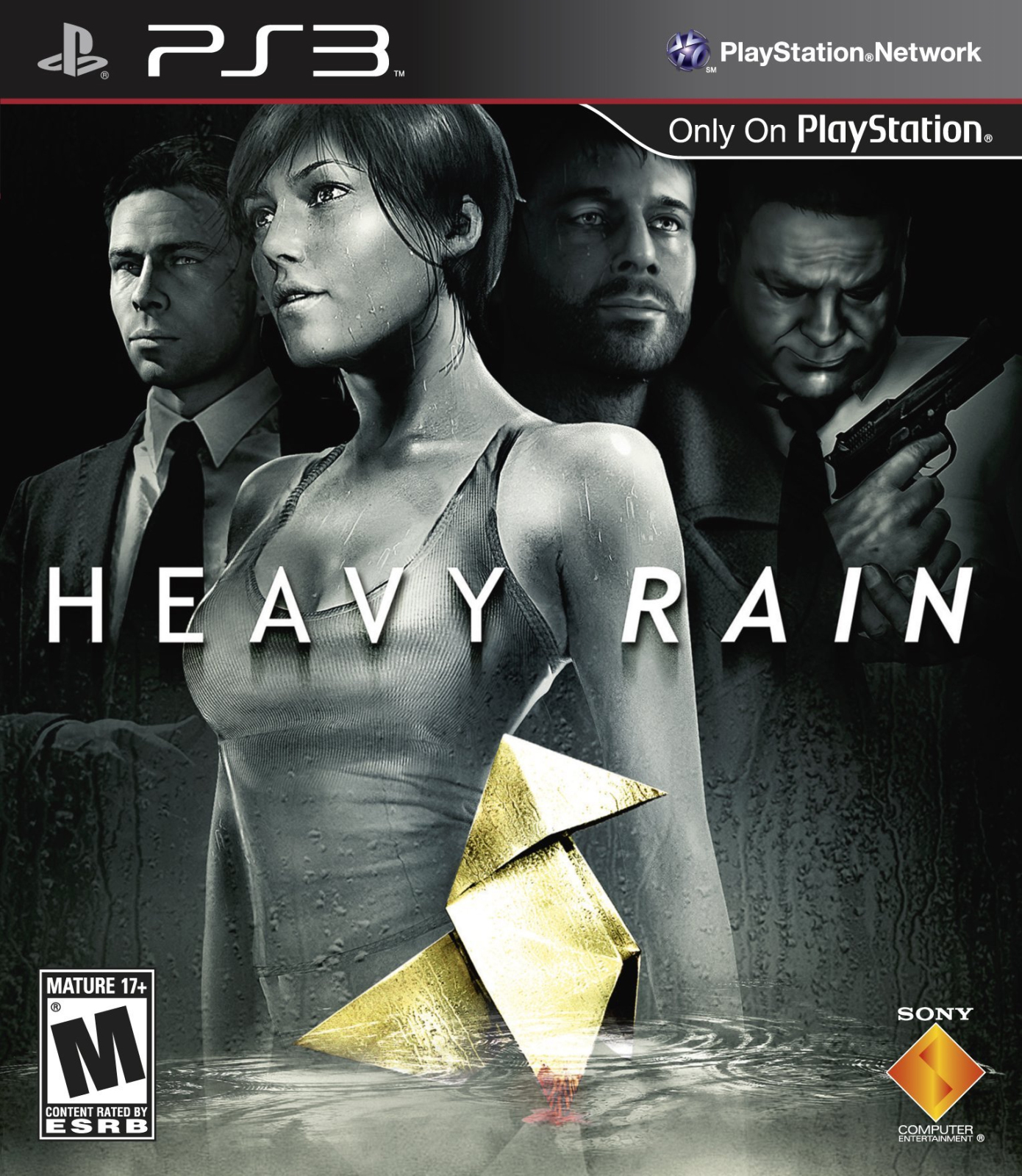
Over the past year, I've been following any media I find on Heavy Rain for the Playstation 3. At first, I only knew this as the game that introduced me to the concept of the uncanny valley. And even though the game's Quick Time Event based gameplay doesn't excite me enough to buy a Playstation 3, I really hope this game sells well because Heavy Rain means a lot to the future of mature games.

When I say "mature", I don't mean it in the classic "Mortal Kombat" sense. Thanks to the general perception that video games are a kids medium and the perception that "mature" in video games means blood, gore, swearing, and sex, video games are still very much a "juvenile" medium. There is nothing "mature" about Mortal Kombat. There is blood and death, but the context and execution of the game is done in a juvenile way that aims to appeal to teenage boys. Most games that are labeled "mature" by the ESRB are only mature in the sense that they have gore, swearing and sex in them, not because they deal with mature themes and subject matter on a mature level.

Video games as a medium is still in its infancy and its still trying to find its place in this world. Up until the mid 90's, video games were seen almost exclusively as a kids-only medium. We have made strides for more mature content since, but on a commercial level, most games that are classified as "mature" are just as juvenile as the original Mortal Kombat. I don't need to stretch far for examples of this. Is Gears of War truly "mature"? Is God of War? The Dead or Alive series? I could go on, but I'm sure you get my point.


The one major blockbuster game that I think most people will point to as a counter-argument is Modern Warfare 2. I'm pretty sure you know what happens during the beginning of the game, but if you don't, skip the next two paragraphs. One scene in particular at the airport features you as an undercover agent running with a bunch of Russian terrorists as they massacre hundreds of innocent people. You, as a gamer have the option of shooting innocent civilians if you want to. I understand what Infinity Ward was trying to go for in terms of making you feel bad for the brutality of terrorism, but I feel like that entire scene did not fit the game, was poorly executed and overall didn't have the weight that the scene should have had.

I don't think Modern Warfare 2 "earned" that scene. For a game that just before the airport asks you to ride on a snowmobile and shoot guys, then follows the airport scene with increasingly bombastic and ridiculous tasks and plot points, the one "serious" scene feels horribly out of place. The game never tries to make you think about it on a more serious level after that scene, instead going back to the core mechanic of shooting thousands of dudes. The ultimate failure of that scene though, is that it doesn't make sense. Shepherd's main goals is to take out Makarov, so why doesn't he have you do it right there? Sure, it would ruin the entire plot, but at least what was left of the plot would make sense. Should you try and kill Makarov in that level, the terrorists will kill you, causing a fail-state, and you having to try again. In a scene where you're supposed to die anyway, the only reason for the level to not end there is because the creators of the game want you to play through it all the way, regardless of how it breaks the story to the player.

Image from Kotaku

To bring this all the way back around, Heavy Rain has been hyped as truly mature game. The overall story and the way it unfolds is done in a way that appeals to an adult on a mature level. I can see the kids who play Modern Warfare 2 cringing at the thought of playing a game where you have to help your son do his homework and tuck him into bed at night, but I like knowing that this experience isn't for them. Are there enough people interested in playing a game like Heavy Rain? That's the million dollar question.

Heavy Rain could potentially be a notable step forward for video games as a medium if it is a sales success. By proving that gamers will buy games with truly mature content, major publishers and developers could decide that it's worth it to make more truly mature games. Maybe then the medium will move a step closer to universal acceptance. But if this game flops, then it's further proof that people aren't ready to play truly mature video games.

I don't think Heavy Rain will be the "Citizen Kane" of video games. But as someone who wants to see this medium grow, it's hard for me to cheer against what Heavy Rain is trying to do. I applaud Quantic Dream and Sony for backing up such an endeavor and hope for the best.

Image from Kotaku

When it comes to video games, it's very easy to figure out what to do with games that are clearly good and games that are clearly bad. A good game will not let you go until you've squeezed every last bit of the experience out of it, while a bad game will eat at your soul until you get rid of it. But what are we to do with mediocre games? The games that aren't bad, but aren't necessarily good, either?

The last time I wrote about Silent Hill: Homecoming, I had some good things to say about it and a number of criticisms as well. The post ended on a very negative note. Despite the things I disliked about the game, I did go back to play it again. I wanted to be able to definitively back up my negative feelings towards the game and let it collect dust on my shelf once and for all. The problem is...it got kind of good. The scenarios I was playing through were interesting enough to keep me pacing forward, even though I'm still not sure exactly what the story to this game is. I played some more, until I felt like I was done for the day.

Unfortunately for me, this is when a new problem arose. I got to a stretch in the game that did not offer a checkpoint to save. I said to myself, "OK, I'll just play to the next checkpoint." I wouldn't actually get to the next checkpoint for another hour. Games made in this day and age that have such disparate save points should die in a fire. I was ready to let this game go when I decided to check a strategy guide, just to see how far I had made it through the game. "Damn it!" I said to myself. "I'm half way through."

Image from IGN

I've only been playing this game for about four hours. At this moment, what's another four hours? I could still get to experience what is good about this game, if I can bear with its weaknesses. There are also achievement points to be had, which seem to be coming at a decent rate. Ultimately though, I should be playing games because their fun, right? And there are definitely other games I could play that would be more fun. But maybe this game will be fun enough for the four more hours I'll need to beat it.

Maybe I'm just a game snob, but I don't like having to think about whether or not I want to continue playing a game. If it's good, I'll keep going. If it's not, forget it. But when you play a mediocre game and already have invested some time in it, the choice of whether or not to play it gets murkier than it really should.

So what am I to do with Silent Hill: Homecoming? I have decided to play it through to the end on two conditions. One, I will only play from one checkpoint to another. I don't ever want to get stuck want to quit between checkpoints ever again, and I won't know when the next one will arrive. The other condition? If this game commits another heinous crime against fun, then I'll bury it once and for all.

Happy Valentines Day! For those of you in love, out of love, or in-between love, I hope that your Valentines Day turns out to be a good one. Up until recently, the majority of my Valentines Days were horrible, but this isn't the right forum to discuss that.

Anyway, I thought today would be a good day to start what may become a series of entries from me that pertain the role video games have in a relationship with a significant other that I call "Girlfriend Gaming". I don't mean to exclude the GLBT community, as some of my best friends are GLBT, but I would not be able to speak well on the intricacies of that dynamic. In any case, I'm sure that anyone with a significant other can find something to relate to here.

Over the last few years of checking out video game message boards and podcasts, I've seen this one particular topic pop up over and over again: How do I get my girlfriend into gaming? Often times, this question is brought forth by a guy who is a core gamer who is in a relationship with a girl who is only into "causal" games or isn't into video games at all. These discussions usually goes into talks of easing her in with the DS or Wii until she "graduates" into becoming a hot-shot Modern Warfare 2 player.


As someone who is a die-hard fan of video games, I can see their perspective. They love games and would like their significant other to share in that experience with them. There may be some disconnect in their relationship due to their gaming differences and they may want to close that gap. Maybe I'm an idealist when it comes to love, but the whole concept of converting your girlfriend into a gamer kind of goes against my beliefs in love.

Where am I going with this? Well, are you familiar with the phrase, "I love you for who you are?" The majority of the time that expression is said, it's a pile of crap. I hate it when I see/hear/experience this in a relationship of my own or the relationship of someone else, where the other person says that expression, but then they try and change you. They tell you one minute that you're perfect, but then they want you to dress differently, hang out with different friends, eat differently and ultimately change you into what they want you to be rather than who you want to be. I don't hype myself up much as a person, but if there's anything I'm good at, I am good at being me. I have a very strong sense of self that I do not like anyone trying to change. Not to say that I'm stubborn to change or that I don't listen to others, but if something is going to change who I am, it's going to be me that does it. In return, I respect other people's sense of self as best I can. Within the context of a relationship, I'm only in that relationship because I really do love that person for who they are and I try hard to make sure my significant other maintains her own identity.

Image from Got Game

To bring it back around to video games, trying to convert her into a gamer when she isn't a gamer goes against my ideals of love. By doing this, you're trying to change the person you fell in love with in the first place, even though I bet you told her you love her just the way she is. The pain that could come from that could be the equivalent of her saying she loves you, but would like you to be less nerdy. If video games are important enough to you that you need to date a gamer, then go date a gamer rather than make one. It'll be a lot more successful to you in the long run and less hurtful if your current significant other isn't buying what you're selling.

For me, it's not about being with someone that necessarily likes what I like. Having commonalities is great, but it's not necessary for me when it comes to my hobbies. All I ask for is respect of them and in return, I will do my best to respect your hobbies and interests. As long as she doesn't think condescendingly of me because of my association of the medium, then we'll find something else bond over. Even after this long rant, if I still haven't convinced you that your girlfriend is good the way she is, then maybe it's time to go on a quest for a new one rather than force your agenda on your current girlfriend.

Image from IGN

Last time I spoke about Silent Hill: Homecoming, I focused mainly on how freaked out the game made me. It took a lot of will from within for me to overcome my psychological shortcomings to get through that opening sequence. As a survival horror game, I thought it started out really well.

Unfortunately, my mental fortitude hasn't been pushed nearly as hard since. Part of that has come from growing familiar with the world. But most of my growing weariness towards the game comes from the game's design faults and squandered potential.

I guess before I talk about the game it could have been, let me preface this post by saying that I'm still far from finishing it. I've only gotten to the Grand Hotel, which should be enough of an indicator for those that have played it and not enough of a spoiler for those that haven't. Also, let's start by talking about what I think is still good about the game.

Image from IGN

Sound-wise, this game is spectacular. The music is appropriately haunting all the time. During action moments, it does a wonderful job of making your toes curl in fear. On the other hand, during down-time, the game's music does just enough to make you not feel comfortable. Sound effects are also equally appropriate at accomplishing tension. I consistently get freaked out when I walk into a random object in the world and hear it fall over. For a game released in 2008, the visuals hold up fairly well, particularly during the "nightmare" segments. The visual filters do a great job if making the game look "gritty".

It's past that where the game really begins to unravel. When I got past the "nightmare" segment and into the desolate city, the world of Shepherd's Glen and Silent Hill so far come off as boring rather than creepy. A lot of the tension is lost when you're walking around a foggy and plain-looking city.

I enjoy the game's more "traditional" approach to survival horror, but it also takes with it some really annoying design elements. I hate having to wander around each and every inch of the world, constantly hitting the "A" button to make sure I don't miss an item. If I were in the shoes of the character, there's no way I would be carefully scouring through my environment looking for stuff. I'd be doing everything I could to get the heck out of there. Due to the nature of the world's and how the developers want to lead the player down a certain path, there are a number of locked doors and closed off pathways. This wouldn't be a problem if the game wasn't designed to be explored. In turn, this forces the player to check every single door in the game, of which 80% of them are "locked" or "jammed" or whatever other excuse the game gives you for not letting you go beyond the door.

Image from IGN

None of this though is as offensive as the game's fundamentally-flawed and arguably broken combat. In any survival horror game, the biggest fear you should have as a player is physical fear. The fear that something or someone is going to kill you. However, the moment your health is in danger, all you can think of as a player is, "Crap, I need to go through this combat junk."

The basics of how combat works is that the majority of your confrontations are (to this point in the game) one-on-one affairs. You hold the left trigger to lock onto your enemy, then you have the choice of attacking with a quick or strong attack. The problem with the trigger is that it doesn't always center the camera or your guy to the bad guy. I've had the game both not center the camera on the bad guy and not even adjust my character to face the enemy, which leads to me wildly swinging my weapon in the wrong direction.

Even worse than this is the actual act of combat. Neither of your attacks feel good to execute and neither of them feel like they have any weight to them. The combo system is also a joke, which boils down to you hitting two quick attacks and one strong attack repeatedly. You have the ability to dodge attacks when timed correctly, but I have yet to make this work with any sort of consistency. During my last playthrough, I got a gun, which has been pretty useless thus far. The weight and impact of your shots isn't there, and it seems like it takes a whole clip to take anything down. In a game where you only get 10 bullets every 30 minutes, that isn't going to cut it. Regardless of what you do to kill your enemy, it doesn't feel like you do anything more than stand in front of your enemy and hit buttons until your enemy dies. All of the tension and fear is lost when it just looks like you and your enemy aimlessly flailing at each other. I've heard that combat in the Silent Hill series has always been an Achilles heel to the point that the latest version of the game removes combat completely.

I'm at a crossroads with this game. I love the music and am intrigued to find out where this game's story goes. But is that enough for me to bear with checking hundreds of doors and having a horrible time beating up zombies and other monsters one at a time? Maybe it's best to cut this homecoming short.

Image from Joystick 101

With the release of Bioshock 2 only days away, I thought I would take a minute to reflect back on my time with the original Bioshock.

I vividly remember reading video game sites and listening to podcasts who were hyping up how amazing this game was. I didn't care. The screenshots looked pretty, but I didn't care that it came from the guy who made the System Shock games cause I'd never played them before. I didn't care about the Little Sister dynamic. I didn't care that you could add elemental powers to yourself to add variety to the combat.

Then I played the demo. Oh, my, God.

The way that game starts has to be one of the greatest openings in video game history. When your plane crashes and you find the pod that leads you to this incredible looking underwater city, it's mind-blowing. Then you get in there, and the world is equal parts beautiful and creepy. Without spoiling the demo (which if you haven't already tried, you really should), it's wonderfully paced to a climactic end that left me saying, "I need this game. Now."

So within the span of 45-minute demo, I went from indifferent to "zOMG!!!111". I bought that game the moment my local Best Buy opened and hunkered down on the sofa to explore the world of Rapture.

Image from SF Gate

Throughout the game, the atmosphere of the game was always my favourite part of the Bioshock experience. I loved exploring the fantastically-designed world that was part futuristic, part historical and part apocalyptic art deco. Each of the different zones brought something slightly different to the table, which made the game wonderful to look at. To add to the experience, the music was spot-on for the environments, as they went with old-time music from the era the world of Rapture existed in before everything crumbled to crap. At the time, the tapes that were left behind added an extra layer of depth to the world by narrating to you what happened before you got there. This idea has been done to death since, but Bioshock really made that popular.

Character design was also a big win for Bioshock. Save for the last boss, everything you encounter in that game from the splicers to the Little Sisters are wonderfully designed to fit that world. The Big Daddy's themselves have become so iconic, that it's hard not to talk about this generation of gaming without mentioning them.

Speaking of the Big Daddy's, these were arguably the best and one of the weaker parts of the game. As a player, I was always intimidated by them initially due to their size and arsenal. But thanks to the chambers where you were brought back to life with little penalty, it took a lot of wind out of fighting a Big Daddy. Knowing that you could die and come back with the Big Daddy at the same health you left him took away a lot of tension once you figured that out. I also did not like the Little Sister choice system. On a base level, I get the concept of either saving a Little Sister to revert her to human or killing a little sister to harvest her energy. However, the game doesn't really reward you for going down the middle, or harvesting all the Little Sisters. The moment you harvest one little sister, you automatically get the "bad" ending and lose out on the achievement points you would have gotten if you saved them all. Maybe I would have ended up a stronger character in the end if I harvested all the girls, but I beat that game just fine.

I don't know if it was just me, but actually playing the game wasn't as great as the world they gave you to play in. I thought it played fine and the combat was fun, but it's not as good as the top first-person shooters on a mechanical level.

One other thing I wanted to say before I wrap this up: the plot and pacing of Bioshock was incredible...to a point. There is a very distinct point in the game where the plot peaks and slowly devolves from there.

At the time of its release, Bioshock to many was game of the year, and to some the best game of this generation. I'm not sure if I could go that far in stating my love for the game, but the overall product was (and still is) excellent. Here's to hoping that they did not ruin the Bioshock reputation with the (in my opinion) unnecessary sequel.


Sonic has had a hard knock life ever since his heyday on the Genesis. He had a ton of problems transitioning into 3D (which most people say the Sonic games never really pulled off well), he's been held back by stupid sidekicks, his old games have been shoddily ported to every platform imaginable, his new games have been riddled with gimmicks, and he's even been subjected to bestiality. Eww.


I'm not going to go into detail as to why Sonic has sucked, but I'll summarize most of it in once sentence.

"The core ideas that made Sonic fun in the first place didn't translate well into 3D."

With that said, the Internet is losing it after Sega just announced the upcoming release of Sonic the Hedgehog 4: Episode 1, which returns to the classic Sonic-only 2D style that popularized the hedgehog in the first place.

Image from Kotaku

I was never the biggest Sonic the Hedgehog guy, but I have a soft spot in my heart for the first two games. Also, he's one of the most recognizable figures in this medium I love. It was downright tragic to see Sega drag the franchise down into the gutter. Even when the fans vehemently asked for a return to the series' roots, Sega would completely ignore their cries and graft on another stupid gimmick to an already bad 3D game.

Image from Neogaf

Sonic the Hedgehog 4 doesn't guarantee us much of anything, other than it being a 2D Sonic game that will be downloadable in episodic form. It could still suck. It could still feature some of the elements that made the more recent Sonic games awful. But I am glad to see Sega finally care about the people it makes games for and at least attempt to create a product with them in mind. Will Sonic rise to prominence on par with Mario like he did back in the early 90s? Maybe that's a bit much to ask. Let's see if we can get a good Sonic game first, then we'll talk.