In Third Person

A personal look into video games, the video game industry and video game culture.


Flashback to sometime in the early 90s. I was between the ages of 8-10 years old around the time this happened. I was on a family trip, and we stopped at some souvenir shop that happened to have a haunted house in the basement. I guess it was more of a dungeon than anything. As a cocky kid, I thought I could handle it, no problem. Then I went down the stairs, saw a pitch-black hallway, and ran back up. I told my mom straight up, "I'm too scared to do this." Wanting to get her money's worth, my mom then came down there with me. This time, the lights were fully on, everything exposed, and nothing there that could possibly jump out of the blue and kill me. I think whoever was running the dungeon toned it down just so that I could get through it without messing up my underwear. I may have only been in that dark dungeon hallway alone for five seconds, but I still live with that fear to this day.

This would not be the first or last time something would push my fear buttons. In fact, I have a very poor track record handling fear. Unlike many people, I don't get a positive adrenaline rush when something scary happens to me or I watch something scary. When I get scared, I get scared. I can't handle roller coasters because all I can think about in my mind is that this ride might lead me to a horrible death. My perception of roller coasters only got worse when I actually got injured on the last one I was on.

I went a good 15 years without watching a horror movie because of something I saw in a Jason movie when I was a toddler. Since I broke that streak, I've watched less than 10 horror movies. In order to break out of that fear when watching horror movies, I constantly look for an "out" to break the experience for me, whether that's pointing out bad acting, poor plot pacing or obvious use of special effects; anything to take myself away from being scared. To my benefit, most of the scary movies I've been put in front of were awful, which made thinking about stuff other than being scared very easy.
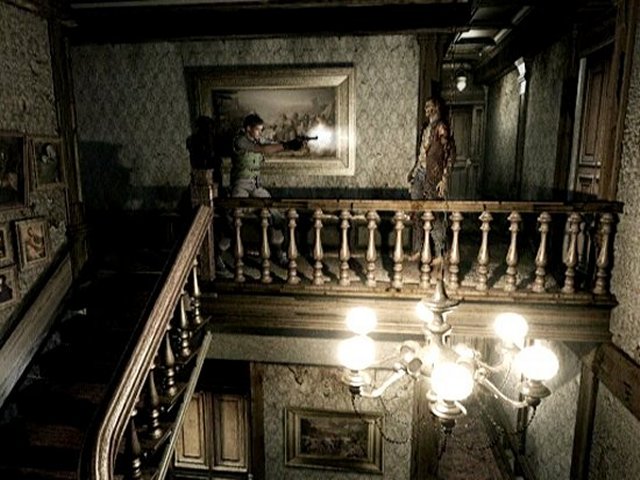
Image from metavideogame

When it comes to feelings of fear from video games, my first and arguably only foray into the survival horror genre came from the Resident Evil remake on Gamecube. I enjoyed the experience, but I flat-out could not play that game at night or in the dark. When those dogs jumped in through the windows, I almost lost it. It was the first time a video game was able to evoke feelings of fear and dread from me, and it made me really uncomfortable. If I didn't receive that game for my birthday, and if everything else about that game wasn't awesome at the time, I would not have touched that game with a 10-foot pole. I did end up beating it, but I was constantly on the verge of losing my composure.
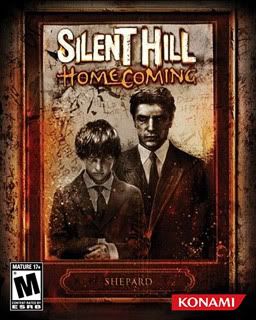

So it is with extreme tepidness that I recently began playing Silent Hill: Homecoming. I have never played a Silent Hill game before and until I received a copy of the game for Christmas, never had any plans on trying. From the little I knew about this series going in, I knew that I should be expecting a more straight-up horror experience, unlike the more recent Resident Evil games that have branched off to be more action-oriented. Having heard through a number of podcasts, I also heard that this is one of the weakest Silent Hill games, even though the Metacritic score appears to be alright.

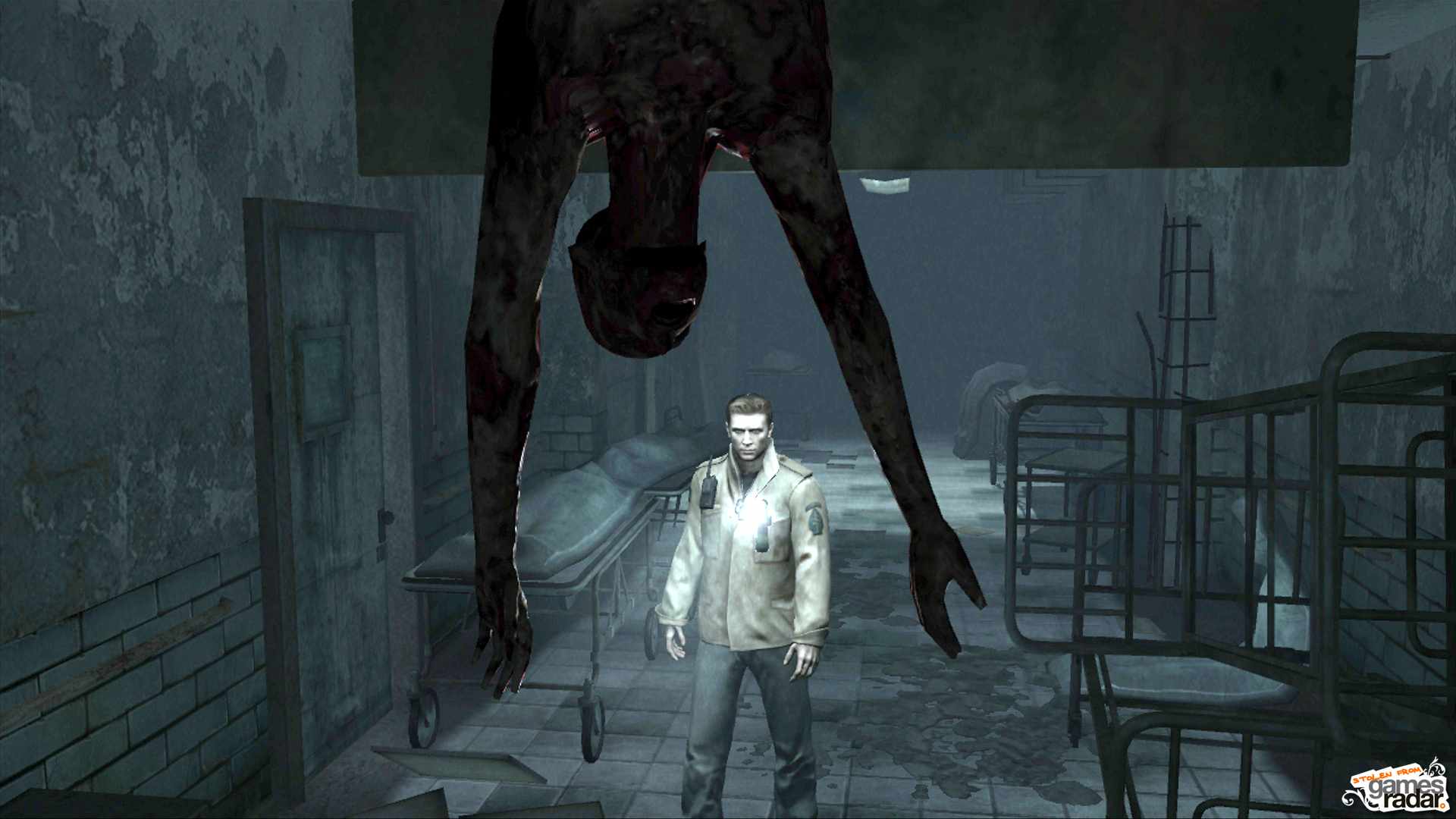
Almost instantly after the gameplay started, the fear I felt when I was alone in that dungeon hallway as a kid hit me. The music, the atmosphere...the tension...I sunk under my skin immediately. In terms of video game fearIt didn't take long for me to second guess myself about this game. In the back of my head from that point on, I just kept asking myself, "Do I want to continue with this?" I wandered around the dark corridors of the hospital, and during the game's first "jump scare", I actually paused the game because I felt an overload of fear.

What has kept me from completely losing it so far are the "game-like" moments that take away from the fear, such as having to navigate a video game menu, or the Resident Evil-style captions, or the sloppy combat thus far. While poor combat is definitely a weak point so far, maybe it's for the best to have something to take my mind off of being scared.

Though if I'm genuinely scared by the game, should I even continue to play it? Even if this game was the hottest game out and had the easiest achievements, is it worth the potential trauma to continue?

Image from Scrap Boutique

A few weeks ago, I found myself at my local Rona, looking for a shelving unit to store and display my video games. To my surprise and amusement, I found a wall-mounted shelving unit specifically designed for gamers. It was shaped like a vertical paper storage unit, where your console would sit in the middle. The top was closed-off and had slots to store about 8 games. The unit also featured a hook on the side to hang a plastic guitar.

For most owners of a vertically-standing video game system, this solution would suffice. However, this shelving unit was horribly inadequate for me.

Over the years, I have amassed an unhealthy number of consoles, controllers, games and peripherals. A few years ago, when I realized that having all this video game stuff on the floor wasn't going to cut it anymore, I bought a bunch of giant plastic totes to store away all my stuff. This was an improvement from laying things out on the floor, but it didn't lend it self well to aesthetics or user-friendliness. They looked awful in a room, weren't easy to get stuff out of and it looked like I was storing away kids toys. Well, they sort of are, but you know what I mean.

Image from Medways

To address usability, I invested in a plastic drawer unit. I kept all the old games and consoles in the totes, and moved all the new games and controllers into the drawers. It worked really well for that, and looked a bit better than the totes. However, the plastic overload does look cheap. As a student working between upwards of three part-time jobs on top, it was the best I could afford.

Image from Mega Discounts

For a while, I even had all of my old and new consoles displayed on an old TV stand. I actually spent 2 hours wiring all of the consoles to my TV to create an ultimate nerd hub of sorts. I decided to ditch this setup because it got way too messy.

Most recently, I came away from a out-of-business Solutions sale with some heavily discounted real shelving. I'm really proud of it and I think it's a good first step into creating an aesthetically tasteful and practical video game space. Ideally, when I move into my own place, I'd like to have a slick-looking video game setup that displays my video game stuff with pride without looking overly intimidating and nerdy.

For now, I have a combination of totes, plastic drawer units and shelving for my stuff. Hopefully I'll be able to complete the gaming setup of my dreams. And no, that dream setup doesn't look anything like the picture below.

Image from Kotaku

If you've been hiding under a rock to keep away from the Internet today, you may have missed the announcement of the Apple iPad. This is essentially a giant iPod Touch with more hard disk space.

While I focus most of my gaming discussion towards console gaming, my iPod Touch has beat out my Nintendo DS as my portable gaming platform of choice. Not necessarily because it's a better gaming platform, but the iPod Touch totally trumps the DS in terms of functionality. With my iPod, I may have the weaker game machine, but in exchange I basically have the functionality of a computer in my pocket. There's no way I leave the house without it because of that. It also doesn't hurt that it has some fun stuff to play on the go, such as Peggle, Drop 7 and Rock Band.

To bring this back around, the Apple iPad really is just a giant iPod Touch. All iPod Touch and iPhone apps will crossover to the new iPad with little to no problem on the user's end. As a gaming platform, I think having the bigger screen and processing power will lend itself towards prettier-looking games. Do I see it being a profoundly different gaming experience than the Touch? No. Without any changes to the core interface, games will have the same strengths and weaknesses they always did on that platform. A keyboard attachment has been announced, but I don't see many (if any) developers requiring users to have one in order to play their games with it.

Image from Engadget

What it does lose in the translation though is the portability. While an iPad is a bit better on space than a laptop, I can't fit an iPad in my pocket. As someone that doesn't like to carry bags and will rely on pants pockets for everything I need, the form factor for an iPad is a potential deal-breaker.

For me specifically, I have a hard time rationally justifying owning a "tweener" machine between an iPod Touch and my Macbook at the cost of between $500-800+. With that said, the nerd in me wants one of these iPad's bad for no other reason than the fact that it's cool looking Apple technology. Maybe I can find half a G-note in my bank account to throw down on the cheap one? Damn it Apple, get out of my brain!

Image from G4TV

I don't think I've ever been torn about a game like I have been for Tatsunoko vs. Capcom. With this game, I can put together a fairly solid case for why I don't want it. I'm not a "Versus" series style of fighting game player. My only experience with this style of fighting game was with the XBOX Live release of Marvel vs. Capcom 2. After years of wanting to test my chops in one of the most popular fighting games of all-time, I finally came to the conclusion that I'm awful at that style of game. I end up mindlessly mashing buttons and randomly doing traditional Street Fighter special move command inputs and hoping for the best. It's cool to see all the flashy action on screen, but I didn't find the fighting satisfying enough for me to commit to getting better. My only experience online with Marvel vs. Capcom 2 was an absolute disaster, where I didn't win a match and at times, didn't connect a single hit on my opponent.

The game is also a Wii-only exclusive, a platform that I hardly play and kind of despise for abandoning me as a core gamer. If I were to buy a fighting game, I would much rather play it on my XBOX 360, which gives me the benefit of HD graphics, achievement points and superior XBOX Live service.

One other reason I'm gun-shy on purchasing Tatsunoko vs. Capcom is that Super Street Fighter IV is just around the corner. If I get into Super Street Fighter IV like I did the original, then I won't be playing any other fighting games for the rest of the year.

Image from The Game Reviews

To all logical people, the debate should end right there. Yet, since the moment this game came into existence, I've wanted it. Part of it is just an irrational urge to have it. But I have other personal and altruistic reasons for wanting it, too. Altruism never is involved in my video game buying thought process, so this particular case is very weird to me.

For one, the critics say this game is great. It features solid gameplay, great graphics and capable online play. They also say the game is easy to get into. I felt burned last time people told me that Marvel vs. Capcom 2 was easy when I interpreted it as a weirdly complicated and difficult fighting game to follow. However, for some reason I'm starting to believe that my experience with MvC 2 wouldn't be the same with TvC. Maybe it's just the hype getting to me. If the game is as awesome as they say it is and I enjoy it then maybe it's well worth my hard-earned money.

So where does altruism fit into this? Well, for one, this game shouldn't have come over to North America in the first place. With over 12 different companies having rights to the Tatsunoko characters, it seemed like this game would never come in North America due to the legal nightmare it would have been to make a western version a reality. Thanks to fan pressure and probably some acts from a higher power from above, we're finally get the chance to get the game on our own.

Image from Night Dreamer

On top of that, this is very much a statement game from Capcom. This is in a way, a love letter to hardcore Wii gamers who don't have that many appealing options to choose from. Heck, Tatsunoko vs. Capcom is arguably the first good fighting game for a Nintendo platform since Super Street Fighter II on the Super Nintendo. As a kid who was waited for the next great fighting game to come out on a Nintendo platform after Super Street Fighter II and never got it, now could be a time to close some psychological wounds and have fun in the process.

Even beyond my own personal pain, buying this game could be my part in showing video game developers that Wii owners want hardcore games. The last few major Wii games that targed the core audience, such as Mad World, The Conduit and Dead Space: Extraction flopped hard. For all the complaining core Wii owners do about the lack of core games, we haven't supported the core games we do get. If we don't show game publishers that core Wii gamers will buy core Wii games, then we'll only get the usual Mario and Zelda games along with 1,000 more crappy mini-game collections. This is a chance for me to stand up and say that I will support quality core Wii games so that companies will continue to support players like me on this system.

If there is any game I personally should stand up for, it's this one. It's a great fighting game on a system whose lineage hasn't seen a good fighting game in 15 years, and if this flops, may never get another good one again. And unlike those other core Wii games I mentioned earlier, Tatsunoko vs. Capcom is even more likely to fail harder than those other games, due to the small population of fighting game players and the fact that most people in North America don't even know half of the characters in this game. Even if I pay full price for this game, I still expect it to bomb hard.

Generally, my thought process behind buying a game doesn't run very deep. If I want it, I buy it. If I want it, but not enough to pay full price, then I'll get it on sale. I don't even know yet if I want this game based on my normal criteria for why I buy games. But if there was ever a time to buy a video game to support a cause - that cause being the continued support of core gamers of the Wii - maybe it's time I plunk down some paper and show the world where my curly mustache is at.

Image from Pixelated Gamer

In April of 2008, Grand Theft Auto IV captured my imagination with a great story and fun open-world gameplay. Prior to GTA IV, my only open-world gaming experience was with The Godfather on the Wii. While many may have grown accustomed to (or weary of) the Grand Theft Auto formula by this point, I was completely caught up in the life of Niko Bellic, trying to find my way in Liberty City.

Almost two years removed from that experience (and almost one year since the release of The Lost and Damned), I have begun playing Episodes From Liberty City, which I received as a Christmas present from my girlfriend. Will this GTA IV add-on experience grab me like GTA IV did? Will it stand out on its own terms? Does the GTA IV style of play hold up even after I've played other fantastic open-world style games like Assassin's Creed II and Borderlands?

Before I get into this, I must preface my writing by saying that I've only played The Lost and Damned so far and that I'm not very far into it. I'm definitely in no position to pass any sort of final judgment on the game. I just wanted to take a bit of time to write about my initial feelings towards this episode.

Image from IGN

Right off the bat, the tone of this game is very different from IV. Rockstar did a great job of re-purposing the world of Liberty City to better tell the story of Johnny and The Lost biker gang. All of the graphics have this gritty filter over it, which does make the world look and feel different from the Liberty City of old even though its the same place. New music, radio stations and television shows have been added to spice up the media content lineup. Motorcycle handling was one of the things I hated about GTA IV, but it feels a lot better in this one.

What stands out to me the most though so far is the story. The tale of a brotherhood biker gang taking on a rival gang while facing internal strife feels really well done. The tension between Johnny and Billy is palpable and believable. I'm very interested in seeing where this goes. Even in game, the brotherhood aspect of the story matters. You have meters that monitor your relationships with other members of your gang. The longer they stay alive, the better they will perform when you're out on missions with them. If certain members die, others will fill their place, but their meters will be reset.

The one thing that has really hampered the experience for me so far are the controls. Historically, the GTA series has been known for not having the most intuitive control setups. When I first jumped into IV, I had nothing else to base it on, so the transition wasn't that painful. After playing a number of other games since then, it has been tough getting re-accustomed to the controls and how the game responds to my commands. I most recently played the mission where you travel with Niko and Playboy X to the drug deal, and a combination of the controls and the game logic lead me to die about a dozen times before I finally beat it.

Maybe I'll be able to get comfortable with or overcome the controls. There's still a lot of motivation on my end to play it, so we'll see how the rest of The Lost and Damned plays out.

Image from The Lost Gamer

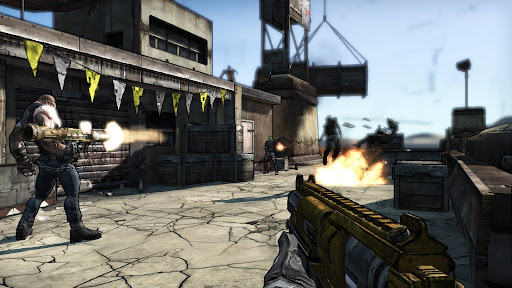
I thought I could separate myself from Borderlands the moment I beat it. Sure, I only beat it on playthrough 1, and my character had only reached level 35, but I had basically seen everything there was to do in the game. All that was left was playthrough 2, which is the exact same quest, with tougher enemies and more awesome guns. I figured now was the time to move onto the next game in my backlog.

And yet, here I am, still playing this game. I took a few days off to chip away at my backlog, but one lazy Sunday playing co-op on playthrough 2 with my brother was enough to reel me back in. My usual nightly routine of late has been to play a few missions in Grand Theft Auto IV: Episodes From Liberty City followed by Borderlands.

Unlike my first time playing through Borderlands, I've taken a much more clinical approach to the game. With no surprises left for me to experience, I've just been tearing through quests in a very methodical and exacting order to maximize my XP building and gun collecting. In a way, I feel ridiculous essentially playing the same game over again when I have so many other "new" games to play. Trumping all of that though, is my continued desire to play the what is mostly the same game again because the core experience really is awesome.

Image from IGN

Games like Tetris and Super Mario are great examples of games with great core design and technical mechanics. If you boil down both games to their simplest elements (dropping pieces into a well for the former and jumping for the latter), you'll see that those core elements are rock solid and make everything else come together. Without a solid core, a game that has the best frills will still suck and be no fun to play.

Borderlands is built around the core idea of improving your character through XP, weapon proficiency and better guns. As I've already pointed out, a lot of the other elements of this game are janky, if not broken. At the heart of the game though are well-executed core design and technical mechanics that make the game fun. It is still a pleasure to play through quests, improve my character and find bigger and more awesome weaponry, even though it's my second time through and my game clock says I've played Borderlands for over 50 hours.

Until I hit level 50 and beat playthrough 2, I don't see myself putting down Borderlands. If you're the type of gamer that is looking to maximize your gaming dollar, there is a lot of game in Borderlands to play. I'm projecting it to take me about 60 hours to max out my soldier, and I could start the process all over again with one of the other three available characters. Maybe I could get super crazy and max out all four characters. Or I could invest in the downloadable content to extend my Borderlands experience even further. I don't see myself falling that deep into the rabbit hole, but man, I'm enjoying Borderlands a lot more than I thought I ever would.

Image from Gaming Bolt

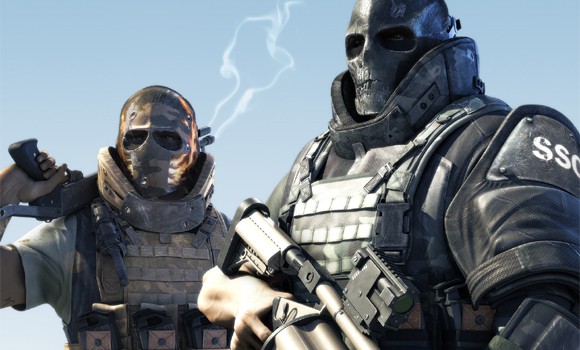
Hot off the heels of Army of Two: The 40th Day, I thought I'd take a minute to write a bit about the original Army of Two. I received this game as a Christmas present this year and have put in some time with it, so I thought I'd share my thoughts on it while it's relevant again.

Back when the original released, I played the Army of Two demo and thought it was alright. It didn't grab me enough to buy it, but it felt like a competent Gears of War clone set in the present. Reviews of the game ranged from good to mediocre, which wasn't enough of a third-party endorsement to sell me on it. In that time, the game has gone on to sell millions of copies and spawn the recently-released sequel.

Most people will admit to the game being flawed, regardless of the fun they got out of it. Going back to it almost two years removed from the original release has not left a favourable impression on me. Since the release of Army of Two, both Gears of War 2 and Modern Warfare 2 have hit the marketplace. Both those games are the two biggest inspirations that Army of Two draws from, and both of those games are way better.

When playing this game, everything that draws from other games feels worse here. The shooting "feel" doesn't have the same weight to it. The impact of bullets makes it feel like my machine gun is a pea shooter. AI for both your partner and the bad guys is pretty dumb. The interface is clunky and not well laid out. The voice-work is poorly written and executed. Even the overall tone of the game left me with a sour taste in my mouth. The idea of two jerk mercenaries fist-bumping their way through Afghanistan was a huge turn-off for me.

Image from IGN

Where I do give Army of Two credit is that the game tries really hard to stand on its own, even with all of the other elements it borrows. Right off the bat, the game is tailor-made for two-player co-op, which can't really be said for either the Gears of War or Call of Duty series. They add in a number of co-op teamwork elements to spice things up, such as the aggro system, boosting your teammate over a wall, the ability to easily trade weapons, back-to-back shootouts and fist-bumping action for a job well done. While I see the potential in these ideas, the executions for all of them left a lot to be desired. All of these team elements felt forced in a "video game" sort of way where you execute a team tactic. As a player, it feels like you execute these team actions because the game makes you do it at this point rather than you do it because it's the best way to handle a situation.

In spite of my criticisms, millions of people bought the game. Reviews of the sequel have been better, but still not spectacular. I see where the developers behind Army of Two are trying to go, and I hope they eventually get there. However, this first game is at best a proof of concept. If you've only played the second game and are considering playing the origin story, it may be best to just pass. As for me, I appreciate it as a Christmas present, but I probably won't go back to this anytime soon until I find myself out of other games to play.